Why You Shouldn’t Ignore a Slow Drain (And When to Call a Pro)
What a slow drain is really telling you
A slow drain is usually your system asking for help early. Not always an emergency, but it’s rarely “nothing.” In a finished home it can turn into water damage. On a remodel, it can turn into a schedule mess and a bad homeowner experience.
The small warning before the big callback
Most clogs don’t happen all at once. They build up over time: a little grease here, some hair there, soap scum, wipes, or even a partial belly in the line that catches debris. The drain still works, so it’s easy to ignore, until it doesn’t. Then you’re dealing with a backup at the worst possible time.
Why it matters for GCs and remodel timelines
If you’re a GC or remodeler in the North Metro, a slow drain is a risk item. It can delay inspections, force rework, and create the kind of “why didn’t anyone catch this?” moment that hurts trust. Getting ahead of it is reputation insurance.
Most common causes of slow drains in North Metro homes
We see a consistent pattern in Blaine, Andover, Ham Lake, Coon Rapids, and the surrounding North Metro. The fixture tells you a lot about what’s happening in the pipe.
Kitchen lines: grease and food buildup
Grease buildup on pipe walls that narrows the line over time.Food solids and starches that stick and create a “catch point.”Improper disposal habits like dumping pan drippings or coffee grounds.
Bathroom lines: hair, soap scum, and product residue
Hair mats that form right past the trap and grab more debris.Soap and hard-water scale that builds a sticky interior surface.Thick product residue from gels, oils, and certain conditioners.
Laundry and utility: lint and sludge
Lint accumulation that can pack into long horizontal runs.Detergent and softener residue that turns into sludge.Utility sink misuse like rinsing paint tools or drywall mud.
Main line issues: roots, bellies, and broken pipe
If multiple fixtures are slow, you may be dealing with the main. Common culprits:
Tree roots at joints that snag paper and grow into a blockage.Pipe belly (sag) that holds water and catches solids.Collapsed or offset pipe from age, soil movement, or old materials.
Why ignoring a slow drain gets expensive fast
Water damage and mold risk
A slow drain can become an overflow without much warning. A tub, shower, or laundry standpipe that can’t keep up creates water where you don’t want it: behind base, under flooring, into a ceiling cavity, or into a finished basement. The cleanup is almost always more expensive than addressing the drain early.
Finish protection during remodels
New tile, fresh paint, cabinetry, and finished flooring don’t forgive plumbing surprises. A backup after finishes go in can mean tear-out, repainting, and callbacks. That’s real money and real stress for the homeowner, and it lands on the GC’s plate even if the drain issue started years before the remodel.
Schedule risk: the hidden cost to a GC’s reputation
The big cost isn’t always the invoice. It’s the lost momentum: trades stacked up, inspections pushed, homeowners frustrated, and you spending your day playing traffic cop. If you’ve been burned by flaky subs before, you already know how fast “one small issue” turns into chaos.
What you can try first (low-risk checks)
There are a few smart first steps that won’t damage the plumbing system or create a bigger problem. The goal is to gather information, not to force a fix.
Confirm it’s one fixture or the whole house
Test nearby fixtures in the same bathroom or kitchen group.Watch for bubbling or gurgling when another fixture drains.Check the lowest drain in the home, often a basement floor drain.
If one sink is slow, it’s often local. If multiple fixtures are slow or backing up, think main line or venting and move to a pro call sooner.
Simple cleaning steps that don’t harm the system
Remove and clean the drain stopper to pull hair and residue.Flush with hot water to move light buildup, especially in kitchens.Clean the P-trap if it’s accessible and you’re comfortable doing it.
What to avoid: chemicals and aggressive DIY tactics
Chemical drain cleaners can create problems, especially if the line is partially blocked and the chemical sits in the pipe. It’s also a safety issue for whoever works on it next.
Avoid harsh chemical cleaners that can damage seals and piping.Avoid repeated plunging that can push a partial clog deeper.Avoid bargain augers that can kink, break, or damage older lines.
Red flags: when to call for professional drain cleaning
Professional drain cleaning isn’t about “we have better tools.” It’s about clearing the line fully, diagnosing the real cause, and preventing the same issue from coming back next week.
Recurring clogs and slow drains
If you’re clearing the same drain every month, it’s not solved. Something is restricting flow and catching debris. That’s where a proper cleaning and, often, a camera inspection saves time and frustration.
Multiple fixtures backing up
Two or more fixtures acting up is the moment to stop guessing. A main line problem can back up into the lowest point in the home, which is exactly where finished basements get hurt.
Gurgling, sewer smells, or water around a floor drain
Gurgling sounds can indicate a blockage or venting issue.Sewer odor can signal standing waste or a dry trap caused by siphoning.Floor drain seepage is often an early main line warning sign.
Older homes and remodel scope changes
On older homes, the drain system may include cast iron, clay tile, or mixed materials with decades of buildup. If you’re changing fixtures, adding a shower, moving a kitchen, or finishing a basement, it’s smart to verify drainage and capacity before closing walls.
How pros diagnose and clear drains (without chaos)
At MH Plumbing, the goal is simple: solve the issue cleanly, keep the site protected, and keep you in the loop so nobody’s guessing.
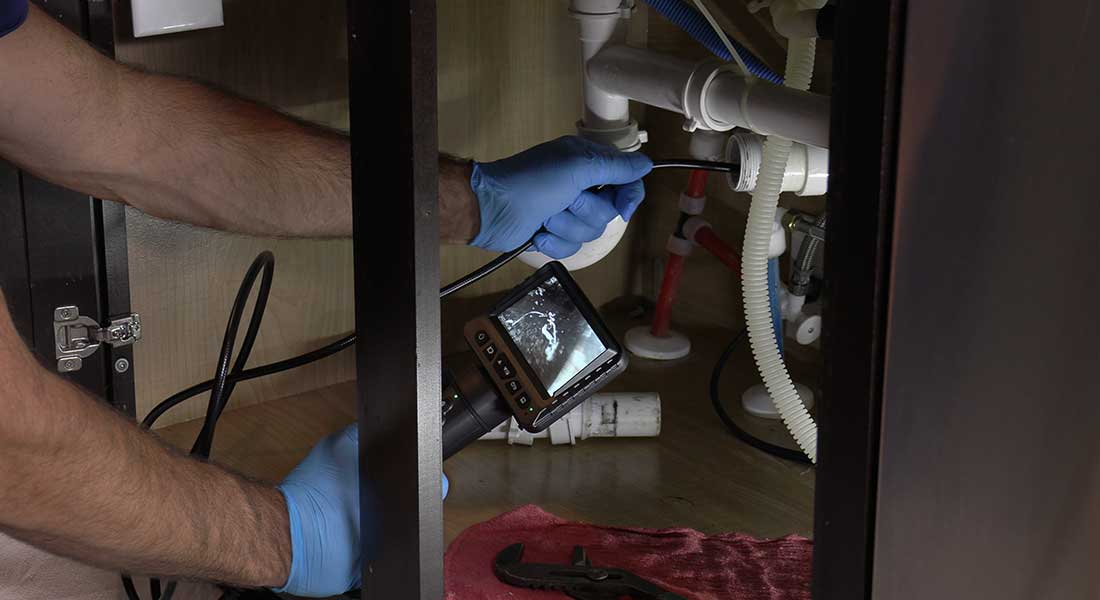
Camera inspections: see the problem, don’t guess
A camera inspection lets you see:
Exact blockage location so we don’t waste time chasing symptoms.Pipe condition and material to choose the right clearing method.Structural issues like roots, offsets, bellies, or cracks.
This is also a huge help for GCs because it turns “I think” into documentation you can show the homeowner.
Cable/snaking vs. hydro jetting
Both have a place, and choosing the right one matters.
Cable (snaking) is great for punching through a localized blockage and restoring flow fast.Hydro jetting is used to scour the pipe walls, removing grease and buildup that causes repeat clogs.Targeted approach based on pipe condition keeps the system protected.
Clogged pipe repair Maple Grove: when cleaning isn’t enough
Sometimes the line is slow because the pipe is damaged, not dirty. If the camera shows a collapsed section, offset joints, or a belly that won’t drain, cleaning is a temporary win at best. That’s where clogged pipe repair in Maple Grove (and across the North Metro) becomes the real fix, especially when you’re trying to avoid future callbacks.
GC checklist: how to prevent drain problems from derailing a project
If you’re managing multiple projects, you don’t need another surprise. Here’s a practical, job-site-friendly way to keep drains from becoming a late-stage fire drill.
Pre-demo drain assessment
Run and drain test on tubs, showers, laundry, and kitchen.Check basement floor drain for signs of past backups.Consider camera inspection on older homes or repeat-problem addresses.
Protecting new finishes and occupied homes
Schedule drain work early before tile, trim, and paint go in.Use dust and surface protection during any access or cleanout work.Plan for cleanouts so future service doesn’t mean cutting drywall.
Communication expectations and documentation
Daily updates on progress so you’re not chasing answers.Clear options with pricing so approvals don’t stall the schedule.Photo or video proof to protect you and reassure the homeowner.
What to expect when you book MH Plumbing
We run a “No Chaos” approach because it’s the only way to protect your schedule and your reputation.
Respect for schedule, respect for the home
On-time arrivals and clear windows, no guessing games.Job site cleanliness with drop cloths, boot protection, and cleanup.Courtesy in occupied homes because we’re guests in someone’s space.
Transparent pricing and clear options
You’ll get straightforward options, explained in plain language. If it’s a cleaning, we’ll tell you what method we recommend and why. If it’s a repair, we’ll walk through the scope and the most practical path forward.
Before-and-after proof (video/photos) and clean closeout
We’re leaning into before-and-after documentation because trust matters. When we can show you what we found and what we fixed, everyone sleeps better, especially on high-end remodels where details matter.
If you’re in the North Metro and a slow drain is starting to threaten your schedule, it’s time for professional drain cleaning that’s done clean, communicated clearly, and finished without drama.
FAQ: slow drains and professional drain cleaning
Is a slow drain always a clog?
No. It’s often buildup, but it can also be venting, a partial collapse, roots, or a pipe belly. If it’s recurring or affecting multiple fixtures, a camera inspection is the fastest way to stop guessing.
Does snaking damage pipes?
When it’s done correctly with the right equipment, cabling is generally safe. The bigger risk comes from mismatched tools, aggressive DIY attempts, or running a cable through compromised piping without knowing the condition first.
Is hydro jetting safe for older piping?
It depends on pipe material and condition. That’s why we like to inspect first. Jetting can be a great solution for grease and heavy buildup, but it should be applied with the right pressure and nozzle for the system.
Can I use Drano or other chemical cleaners?
We don’t recommend it. Chemical cleaners can be hazardous, may not solve the real restriction, and can complicate professional service if the chemical is sitting in the line.
How fast can you respond in the North Metro?
Schedules vary by season and project load, but our goal is always predictable scheduling and proactive communication. If you’ve got a slow drain that’s turning into a project risk, call and we’ll give you the soonest realistic window and a plan.
