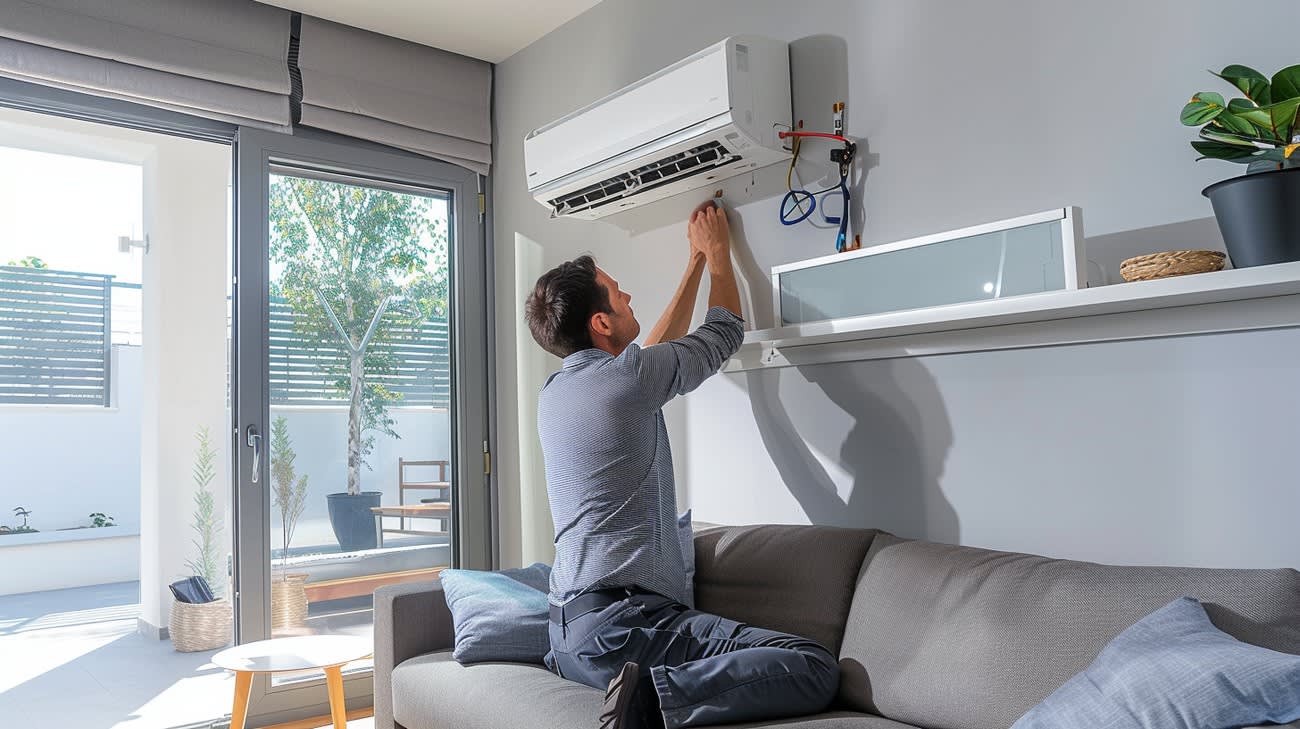
Are Ductless Mini-Splits Worth It for Older Twin Cities Homes? A Straight Answer for Remodelers and Homeowners
Why older Twin Cities homes are tricky to cool (and why that matters)
Older Twin Cities homes have a way of humbling even “simple” cooling upgrades. The house might be solid, the remodel might be high-end, and you still get that one bedroom that’s 8 degrees warmer than the rest of the place.
Old floor plans, hot rooms, and no duct paths
In North Metro neighborhoods like Blaine, Coon Rapids, Andover, and Ham Lake, we see a lot of 1920s–1970s homes with one (or more) of these realities:
Second floors with limited returns and underfed suppliesFinished basements added years after the original mechanical layoutAttics and knee walls with inconsistent insulation and air sealingChases that don’t exist for new duct runs without major carpentry
When airflow pathways aren’t there, you can replace equipment all day and still fight comfort complaints.
Why “just swap the A/C” often isn’t the real fix
A/C replacement in the Twin Cities can be the right move when the system is at end-of-life and the ductwork is sized and balanced well. In older homes, the problem is often distribution, not just equipment. That’s where ductless can make a lot of sense: it bypasses the duct bottleneck and treats the rooms that actually need help.
What a ductless mini-split actually is (without the brochure talk)
Outdoor unit + indoor heads + refrigerant lines
A ductless mini-split is basically an outdoor condenser connected to one or multiple indoor units (“heads”) by refrigerant lines and control wiring. Each indoor unit conditions a specific zone. You get targeted comfort without building ductwork through plaster, closets, and finished spaces.
Heat pump vs “AC only” options in Minnesota
Most systems we install are heat pumps, meaning they provide cooling in summer and heating in shoulder seasons and, with cold-climate equipment, deep into winter. In Minnesota, the details matter: low-ambient performance, defrost strategy, and proper sizing are what separate “this is awesome” from “why is it running all the time?”
When ductless mini-splits are absolutely worth it
If you’re weighing ductless mini-split installation for an older Twin Cities home, these are the scenarios where the value shows up fast, both in comfort and in fewer project headaches.
No existing ductwork (or ducts you don’t want to touch)
Some older homes have boilers and radiators with no forced-air ducting at all. Adding central air means adding ducts, which can turn into a full-on carpentry and drywall project. Mini-splits often give you a cleaner path to cooling with far less disruption to finished surfaces.
Second-floor bedrooms that never cool down
Stack effect is real here. Upper floors get hot, and older duct systems frequently don’t have the return air and supply volume to keep up. A dedicated mini-split zone upstairs can solve the complaint without overcooling the main floor.
Basement finishes and additions
Basement remodels and additions are prime candidates. You can:
Condition the new space independently from the existing systemAvoid undersized trunk lines and long branch runsKeep ceilings clean without soffits for ducts
For high-end remodelers, that means fewer compromises on layout and finishes.
Zoning needs for high-end remodels
Clients paying for premium finishes expect comfort to match. Ductless zoning gives you room-by-room control without retrofitting dampers into ductwork that wasn’t designed for zoning in the first place.
When they’re not the best fit
Mini-splits are a tool, not magic. Here’s when we slow the conversation down.
Whole-home uniformity expectations
If a homeowner expects perfectly uniform temps in every room using only ductless heads, you may need more zones than the budget or the aesthetics allow. Sometimes a hybrid plan (ducted system for the bulk of the home plus ductless for problem areas) is the right compromise.
Power/service limitations
Older electrical panels can be tight on capacity. Mini-splits are efficient, but they still need dedicated circuits. If the home is already adding induction, EV charging, or a spa, the electrical plan needs to be coordinated early.
Aesthetic objections to wall-mounted heads
Some clients just don’t want wall units. There are other indoor unit styles (ceiling cassettes, slim ducted, floor consoles), but they change labor, routing, and cost. The key is picking the right head type for the room before the finish schedule locks in.
Mini-split vs A/C replacement in the Twin Cities: how to choose fast
If you’re a GC trying to make a clean call without getting stuck in analysis paralysis, here’s the decision framework we use on walkthroughs.
If you already have ducts: fix the distribution first
If ductwork exists and is accessible, it’s worth checking the fundamentals before jumping to ductless:
Return air sizing and placement for proper circulationSupply trunk sizing and long-run pressure lossesBalancing dampers and register selection
When distribution is the real issue, an A/C replacement in the Twin Cities won’t cure it by itself. You might still choose replacement, but you’ll want duct corrections in the scope.
If the furnace is fine: pair smartly, don’t overspend
A lot of older homes have a decent furnace that doesn’t need to be replaced yet. In those cases, adding a ductless system for key zones can deliver comfort without forcing a full mechanical overhaul.
If you’re remodeling: plan mechanical early
Mini-splits are easiest when we’re brought in early enough to route line sets cleanly, hide chases where appropriate, and coordinate with framing and electrical. Waiting until paint is scheduled is when projects get messy and expensive.
Cost reality check: what drives ductless mini-split installation pricing
Homeowners ask, “What does it cost?” Remodelers ask, “What causes the change orders?” Same topic, different pain. Here’s what actually drives cost in the North Metro.
Number of zones and head types
One outdoor unit can serve multiple indoor heads, but each zone adds equipment, piping, electrical, and commissioning time. Wall-mounted heads are usually the most straightforward. Slim ducted and ceiling cassettes can look cleaner but often add framing coordination and access planning.
Line-set routing, patching, and finish protection
In older homes, routing is everything. Can we run through unfinished utility areas, closets, or planned soffits? Or are we fishing through plaster and dealing with finished tile and millwork? The cleanest route is rarely the shortest route, and we’ll prioritize protecting the home and the schedule.
Electrical work and permits
Most installs need a new disconnect and dedicated circuits. If the panel is full or outdated, electrical upgrades can become part of the conversation. Getting this sorted early keeps the project predictable.
Equipment quality for Minnesota conditions
Minnesota-friendly equipment costs more than entry-level options, but it buys you performance when it matters. If the plan is to rely on the heat pump for a meaningful portion of the heating season, cold-climate capability and proper controls are non-negotiable.
Performance in Minnesota winters: what to expect
Cold-climate heat pumps and low-ambient performance
Modern cold-climate mini-splits can heat well below freezing. That said, every system has a point where capacity drops and backup heat matters. In many Twin Cities homes, the smart play is letting the mini-split handle shoulder seasons and lighter loads while a boiler or furnace remains the heavy hitter during deep cold snaps.
Why sizing and layout matter more than brand hype
The biggest comfort issues we see come from:
Oversized equipment short-cycling and feeling clammyUndersized zones running constantly and never catching upPoor head placement causing drafts or dead spots
A solid load calculation and a practical layout beat guesswork every time.
Design details that separate a clean install from a headache
If you’ve been burned by a trade that ghosts you, shows up late, or leaves the site looking like a tornado, you already know the “install” is only half the story. The other half is execution.
Head placement, condensate routing, and service access
A mini-split can look clean on day one and be a maintenance headache for the next 10 years if service access wasn’t considered. We plan for:
Serviceable filter access without moving furnitureCondensate routing that won’t freeze or leakLine-set protection and clean exterior penetrations
Noise, airflow, and comfort balancing
Mini-splits are generally quiet, but placement matters. We avoid putting heads where airflow blasts a bed or a primary seating area. We also balance zones so one room doesn’t become the “dump zone” that runs harder than the rest.
How we keep remodel sites clean and predictable (our No Chaos SOP)
At MH Plumbing, our value isn’t just the equipment we hang. It’s the way we run the job so you don’t have to babysit us.
On-time arrivals with clear scheduling expectationsDaily communication so you’re not chasing updatesSpotless cleanup with respect for the home
We also lean on before-and-after job site videos so you can see for yourself what was done and how clean the handoff was. That’s reputation protection for the GC and peace of mind for the homeowner.
A quick planning checklist for remodelers and builders
Questions to answer before drywall
Which rooms need dedicated zoning controlWhere line sets can be routed cleanlyWhether the electrical panel has capacityHow condensate will drain safelyWhere outdoor units can sit quietly and serviceably
What to document for the homeowner
Expected winter performance and backup heat planFilter cleaning frequency and responsibilitiesWarranty coverage and service intervals
How to avoid change orders
Lock head locations before trim selectionsCoordinate chases during framing, not after paintConfirm exterior penetrations and clearances early
Next steps: get a mini-split plan you can trust
What we’ll look at on a walkthrough
When we look at an older Twin Cities home, we’re not just eyeballing where a head could go. We check how the home actually behaves and what your schedule can tolerate. Expect us to look at:
Existing heating system and duct layout (if any)Problem rooms, solar load, and return-air limitationsRouting options that protect finished surfaces
How MH Plumbing communicates and schedules in the North Metro
If you’re a GC, you’re hiring a subcontractor to protect your timeline and your name. That’s our lane. Our “No Chaos” approach is built around predictable execution: clear dates, proactive updates, and a job site that stays clean.
If you’re deciding between ductless mini-split installation and A/C replacement Twin Cities, we’ll give you the straight answer on what fits the house, what fits the remodel plan, and what avoids future callbacks.
