Getting Your A/C Ready for a Humid Minnesota Summer (Without the Job Site Chaos)
Why Minnesota humidity makes A/C systems work harder
When North Metro summer hits that sticky stretch, your A/C isn’t just cooling air. It’s also pulling moisture out of it. That moisture removal is where systems get stressed, where comfort complaints show up, and where mid-season breakdowns tend to start.
Latent load vs. sensible load (the quick version)
Sensible load is temperature. Latent load is humidity. On a humid Minnesota day, your system has to handle both at the same time. If airflow, drainage, or refrigerant performance is even a little off, humidity control drops first and the complaints follow right behind it.
What humidity does to comfort, run time, and wear
Longer run times to pull moisture, even when the thermostat looks satisfied.Higher chance of coil icing when airflow is restricted or charge is off.More condensate water moving through the drain, which means clogs show up faster.More homeowner sensitivity to temperature swings, odors, and “it feels clammy” complaints.
The hidden cost: callbacks and schedule slips
If you’re a GC or builder, you already know this math. A preventable A/C issue becomes:
A homeowner frustration call during a heat wave.A schedule scramble to get a tech on site.A reputation hit, even if it wasn’t your fault.
That’s why A/C maintenance and tune-ups are less about “nice-to-have” and more about protecting the project handoff and the client experience.
Pre-season A/C maintenance and tune-ups: the North Metro checklist
This is the same order we think through in the field. Airflow and water management first, then controls and performance checks. If you want fewer July surprises, this is where it starts.
Airflow first: filters, returns, and supply paths
Replace the filter with the correct size and proper airflow rating.Confirm return air is not blocked by furniture, stored materials, or remodel dust barriers.Walk the supply vents and verify registers are open and not taped shut.
Airflow issues are the #1 reason systems underperform during humid spells. It also shows up as coil icing, higher energy use, and uneven temps.
Outdoor condenser: clean, clear, and level
Clear vegetation and debris around the unit for proper air exchange.Rinse the coil carefully to remove cottonwood and grime buildup.Check the pad and level so the unit stays stable and drains correctly.
Pro tip for job sites: don’t store siding, trim, or scrap near the condenser. It turns into a heat trap and a service call.
Indoor coil and condensate: keep water moving
Humidity means water. If water can’t drain, it ends up where nobody wants it.
Inspect the condensate drain line for restrictions and proper slope.Check the safety switch if present, and verify it can shut the system down before overflow damage.Look for rust staining or past overflow marks around the furnace or air handler.
If a basement finish is involved, this matters even more. A slow drain can create musty smells and ceiling stains that look like “construction defects” to a homeowner.
Controls: thermostat settings and staging
Verify thermostat calibration so setpoint changes behave predictably.Review fan setting so humidity is not pushed back into the home.Confirm staging behavior on two-stage or variable equipment for smoother comfort.
Electrical and refrigerant basics: what we verify on a pro visit
A professional tune-up is where we check the “stuff you can’t see” that drives reliability.
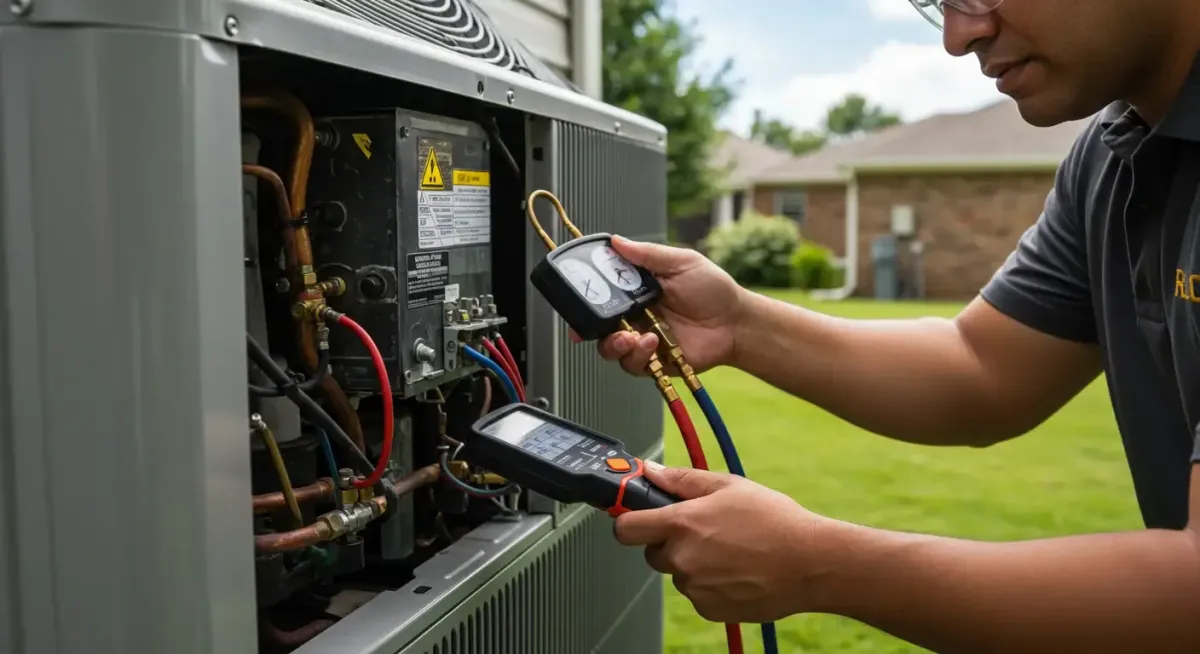
Electrical health checks like capacitors, contactors, and wiring condition.Refrigerant performance verified with proper measurements and manufacturer targets.Temperature split and airflow indicators that catch problems early.
These checks are also what help you decide whether you’re looking at maintenance, an adjustment, or a true repair.
The humidity troublemakers: quick diagnostics that prevent mid-July emergencies
When a system struggles in humid weather, the symptom is usually obvious. The cause is often boring and fixable if you catch it early.
Frozen coil symptoms and root causes
Signs you’ll notice:
Weak airflow at the registers even though the system is running.Ice on the refrigerant line or on the indoor coil area.Water around the unit after the ice starts melting.
Common causes include restricted airflow, dirty coils, or refrigerant issues. Don’t keep running it. Shut it down and get it looked at before you damage the compressor.
Short cycling and uneven temps
Oversized equipment can cool fast but dehumidify poorly.Thermostat placement can cause false readings and rapid cycling.Air leaks and duct issues can make one zone miserable while another is fine.
If you’re a builder, this is one of the easiest ways to avoid punch-list pain: confirm basics like returns, balancing, and duct integrity before the homeowner has lived in it for two weeks.
Musty odors, high indoor humidity, and drain issues
Clogged drain lines can lead to standing water and odors.Wet insulation or framing near the air handler can hold odor for weeks.Improper fan settings can re-evaporate moisture off the coil.
When it’s maintenance vs. when it’s air conditioning repair (Minneapolis and North Metro)
Maintenance is planned and predictable. Repair is urgent and disruptive. Here’s how to tell the difference before it becomes a scramble.
Red flags that need a technician now
Warm air blowing when the thermostat is calling for cooling.Breaker trips or buzzing at the outdoor unit disconnect.Water leaking around the furnace or air handler.Ice buildup on the indoor coil or suction line.Grinding or screeching noises from the condenser fan or blower.
If you’re searching for air conditioning repair Minneapolis, it’s usually because one of these showed up and you need a tech who will communicate clearly, show up when they say they will, and leave the site clean.
What you can safely handle vs. what you shouldn’t touch
You can replace filters, clear debris, and confirm vents are open.You can check the thermostat batteries and settings.Do not open sealed refrigerant systems or electrical compartments.
We’re all for capable homeowners and GCs doing the basics. For refrigerant, electrical, and internal drainage issues, it’s faster and safer to bring in a pro.
How fast action protects your reputation
From a GC standpoint, responsiveness is part of the finish quality. When the A/C issue is handled quickly with clean documentation, your homeowner remembers the professionalism, not the hiccup.
GC-focused: how to bake A/C tune-ups into remodel and new-build schedules
A/C problems love two things: construction dust and last-minute commissioning. A small plan prevents both.
Pre-drywall and pre-punch HVAC checkpoints
Confirm return air strategy is adequate for the space and door positions.Protect equipment from dust and keep filters managed during sanding.Schedule a performance check before punch-list chaos starts.
Basement finishes: humidity control and return air planning
Plan for dehumidification if the basement historically runs damp.Verify supply and return balance so the basement is comfortable, not clammy.Watch condensate routing to avoid hidden water damage behind finishes.
Communication expectations that keep homeowners calm
Set the service window early so nobody is surprised by access needs.Explain what “normal” feels like during high humidity and heat spikes.Share what was checked so the homeowner feels taken care of.
What a “No Chaos” A/C tune-up looks like with MH Plumbing
We’re MH Plumbing in the North Metro. We do HVAC work with the same philosophy we bring to plumbing and remodel projects: respect the home, respect the schedule, and keep the site clean. Premium work should feel organized, not stressful.
Clean job sites and respect for the home
Boot covers and floor protection where it matters.Work area cleanup so the homeowner doesn’t find surprises.Clear explanation of what we touched and why.
Transparent pricing and photo/video proof
No mystery line items on invoices or service notes.Before-and-after visuals so you can see what changed.Documented recommendations prioritized by risk and urgency.
Reliable scheduling that keeps projects moving
Firm arrival windows that respect job site flow.Proactive updates if anything shifts.Seamless handoff so GCs aren’t babysitting subs.
FAQs: A/C maintenance and tune-ups in Minnesota
How often should A/C be serviced in Minnesota?
For most homes and light commercial spaces, plan on annual A/C maintenance and tune-ups, ideally in spring. If a property has heavy cottonwood exposure, pets, or remodel dust, you may benefit from an additional mid-season check.
What’s a fair timeframe to schedule before peak season?
Two to six weeks before consistent heat and humidity is a good target. Once the first heat wave hits, schedules tighten and minor issues turn into urgent calls.
Do mini splits need tune-ups too?
Yes. Ductless mini splits still rely on clean coils, proper drainage, and healthy electrical components. A tune-up keeps efficiency up and prevents water leaks inside finished spaces.
Can an A/C tune-up reduce humidity inside?
Often, yes. If the system is struggling due to airflow restrictions, dirty coils, or drainage problems, correcting those can improve moisture removal. If the home needs more dedicated humidity control, we’ll say that plainly and help you plan it.
Schedule your A/C maintenance and tune-up (North Metro MN)
If you’re a GC, builder, or homeowner in Blaine, Coon Rapids, Andover, Ham Lake, or nearby, we can help you get ahead of summer.
Who we work with
High-end remodelers who need predictable subs.Custom home builders protecting client experience.Homeowners who want clean, respectful service.
What to have ready before we arrive
Access to mechanical spaces including furnace rooms and basements.Thermostat and equipment details if you have model numbers available.Notes on comfort issues like hot rooms or humidity complaints.
How to request service
Book a pre-season visit and we’ll get your system checked, cleaned, and documented so you can head into summer with fewer surprises and fewer urgent calls.
Want this handled with no chaos? Reach out to MH Plumbing and we’ll get you on the schedule.
