5 Signs Your Air Conditioner Is Costing You Money (And What to Do Next)
Why this matters for North Metro remodels and custom builds
If an A/C is “working” but still bleeding money, it shows up in three places: utility bills, comfort complaints, and schedule chaos. For high-end remodelers and custom home builders in the North Metro, that third one is the killer. Homeowners don’t remember your framing timeline. They remember the bedroom that never cooled down and the sub that kept “coming back next week.”
We see a lot of good projects get dragged down by HVAC that’s undersized, oversized, poorly commissioned, or simply aging out. The fix isn’t always a full replacement, but it does need a clean diagnosis and a clear plan.
Utility bills are only part of the cost
Higher kWh use from long run times or short-cycling.More wear and tear on compressors, capacitors, and blowers.Comfort workarounds like running fans nonstop or dropping setpoints.
The hidden hit to schedules, callbacks, and homeowner trust
Repeat trips that chew up your calendar and theirs.Finish work risk when condensate or airflow issues show up late.Reputation damage when a homeowner feels ignored or “sold to.”
Sign #1: Your run times are long, but comfort still isn’t consistent
If the A/C runs forever on warm days and the house still has hot spots, that’s a money leak. Long run time can be normal on peak days, but not when the system can’t hit setpoint or certain rooms never catch up.
What you’ll notice on site
Thermostat setpoint reached late or never reached.One floor fine, another floor warm and stuffy.Homeowner says, “It’s running all day.”
Quick A/C repair and troubleshooting checks
Filter and coil condition with visible dust or matted fins.Outdoor unit clearance blocked by shrubs, fencing, or debris.Supply temperature split to confirm the system is actually cooling.
When an upgrade is the smarter move
If airflow is decent and the system is still struggling, it’s time to talk Energy efficient A/C upgrades. In remodels, we often find the house changed but the equipment didn’t.
Square footage added without a new load calculation.Insulation and window packages changed the load profile.Basement finishes or bonus rooms need better zoning.
Sign #2: The system short-cycles (starts and stops constantly)
Short-cycling is one of the fastest ways to waste energy and wear out equipment. The system burns extra power on every start, and it rarely runs long enough to manage humidity well.
Why short-cycling burns money
Higher start-up amperage spikes energy use.Less moisture removal makes the house feel warmer.Accelerated part failure on compressors and controls.
Common causes we see in remodels
Oversized equipment installed “to be safe.”Thermostat location issues near supply air or sun exposure.Refrigerant or airflow problems that trip safeties or reduce capacity.
Fixes that protect equipment and timelines
Verify static pressure and fix restrictions before touching refrigerant.Confirm blower setup matches the coil and outdoor unit requirements.For chronic oversizing, consider variable-speed, inverter-driven equipment.
Sign #3: Supply air is weak, rooms are uneven, or humidity feels off
Comfort complaints are usually an airflow story. Weak supply air, uneven rooms, or sticky humidity can mean duct problems, poor balancing, incorrect blower settings, or a system that’s not matched to the house.
Airflow problems that show up after renovations
New walls or soffits pinch duct runs and reduce airflow.Registers moved for aesthetics without rebalancing.Added returns were skipped to “save time.”
Duct issues vs equipment issues
Duct issues often show up as whistling, high static, and weak throw.Equipment issues often show up as poor temperature split or icing.Control issues show up as the wrong fan modes or staging behavior.
Energy efficient A/C upgrades that solve comfort zoning
When the home needs different comfort levels by area, zoning and ductless options can be a clean solution, especially in basements, additions, and bonus rooms.
Ductless mini splits for additions and finished basements with separate loads.Variable-speed air handlers that adapt instead of blasting on and off.Smart zoning that keeps bedrooms comfortable without overcooling the rest.
Sign #4: You’re seeing repeat service calls, odd noises, or “mystery” drain issues
Repeat issues are a budget leak and a reputation leak. If a homeowner has seen two different techs and still doesn’t have a clear answer, trust drops fast. This is where a disciplined A/C repair and troubleshooting process matters.
No money in the water: condensate and leak risks
Clogged drains and poorly pitched lines that back up unexpectedly.Improper trap configuration that causes intermittent overflow.Frozen coils that melt and overwhelm a marginal drain setup.
The expensive noises (and what they usually mean)
Screeching often points to motor or belt issues.Rattling often points to loose panels or failing fan components.Buzzing often points to electrical problems or contactor issues.
What a clean diagnostic process looks like
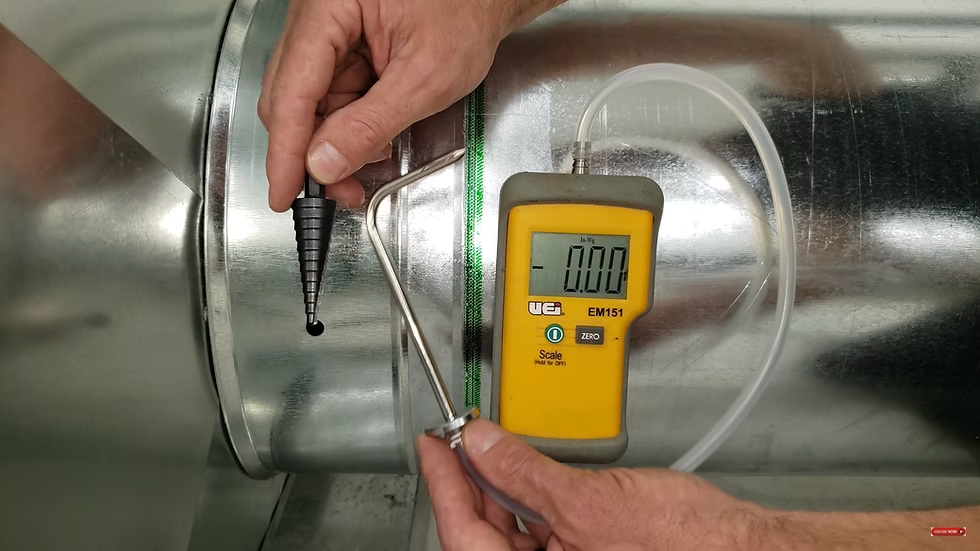
Start with airflow and electrical basics before guessing refrigerant.Measure and document static pressure, temperature split, and amp draw.Show the homeowner or GC photos and video so it’s not “trust me.”
Sign #5: The A/C is aging out, and repairs are becoming the new normal
At a certain point, you’re not “maintaining” a system. You’re funding a slow-motion replacement with extra steps. If you’re seeing frequent repairs and the homeowner is still unhappy, it’s time to evaluate an upgrade with clear numbers and clear expectations.
Age ranges that typically drive decisions
10 to 15 years is where performance often starts dropping.15+ years is where repair frequency tends to climb fast.Any age can be a problem if it was sized or installed incorrectly.
Repair vs upgrade: a contractor-friendly decision framework
If the fix is minor and the system is healthy, repair and optimize.If repairs keep repeating, price the upgrade and stop the bleed.If comfort is the main complaint, solve the load and airflow, not just parts.
What to expect from modern high-efficiency options
Modern systems can deliver big improvements in comfort and operating cost, but only if they’re matched to the home and commissioned correctly.
Higher SEER2 efficiency that lowers operating cost when installed right.Variable-speed operation for better humidity control and quieter performance.Better controls that reduce temperature swings and hot spots.
What we recommend: a “No Chaos” assessment plan
Whether you’re a GC trying to protect your schedule or a homeowner who just wants the house to feel right, the process should be predictable. Our goal is simple: solve the issue, document it clearly, and leave the job site cleaner than we found it.
Step 1: Verify the load and the install conditions
Confirm square footage changes, insulation levels, and window performance.Check duct layout impacts from remodel framing and finish decisions.Validate outdoor unit placement for airflow and service access.
Step 2: Test, document, and show the homeowner
Measure static pressure, temperature split, and system staging.Document findings with before-and-after photos or short videos.Explain what matters in plain language, no technical smokescreen.
Step 3: Give transparent options (repair, optimize, or upgrade)
Option A: Targeted repair with clear scope and expectations.Option B: Airflow and comfort optimization with balancing recommendations.Option C: Energy efficient A/C upgrades with equipment choices that fit the project.
FAQ: Energy efficient A/C upgrades and troubleshooting
Is a tune-up enough to lower bills?
Sometimes. If the system is basically healthy but dirty or slightly out of spec, cleaning coils, replacing filters, and verifying airflow can help. If the system is oversized, undersized, or nearing end-of-life, a tune-up won’t fix the root problem.
Do mini splits make sense in North Metro basements and additions?
Yes, in the right situations. Ductless mini splits are a solid option for additions, bonus rooms, and finished basements where extending existing ductwork creates noise, static pressure issues, or uneven comfort.
How do I avoid oversizing after adding square footage?
Don’t guess. Get an updated load calculation based on the post-remodel home. Oversizing is a common “money leak” because it creates short-cycling, poor humidity control, and comfort complaints.
What should I expect for communication and scheduling?
Clear arrival windows, proactive updates, and a clean job site. That’s our “No Chaos” standard. If we’re on your project, you shouldn’t have to babysit the HVAC work or wonder what’s happening next.
Ready for a cleaner, more predictable HVAC partner?
If you’re a remodeler or custom builder in Blaine, Coon Rapids, Andover, Ham Lake, or anywhere in the North Metro, MH Plumbing can handle HVAC diagnostics, ductless mini split work, and energy efficient A/C upgrades with the same “respect the schedule, respect the home” approach we’re known for.
For GCs: We protect your reputation with clean work and daily communication.For homeowners: We keep it tidy, explain options clearly, and price transparently.For both: You’ll see what we see with photo and video documentation.
Want eyes on an A/C that’s costing you money? Book a diagnostic and we’ll give you a straight answer: repair it, optimize it, or upgrade it.
